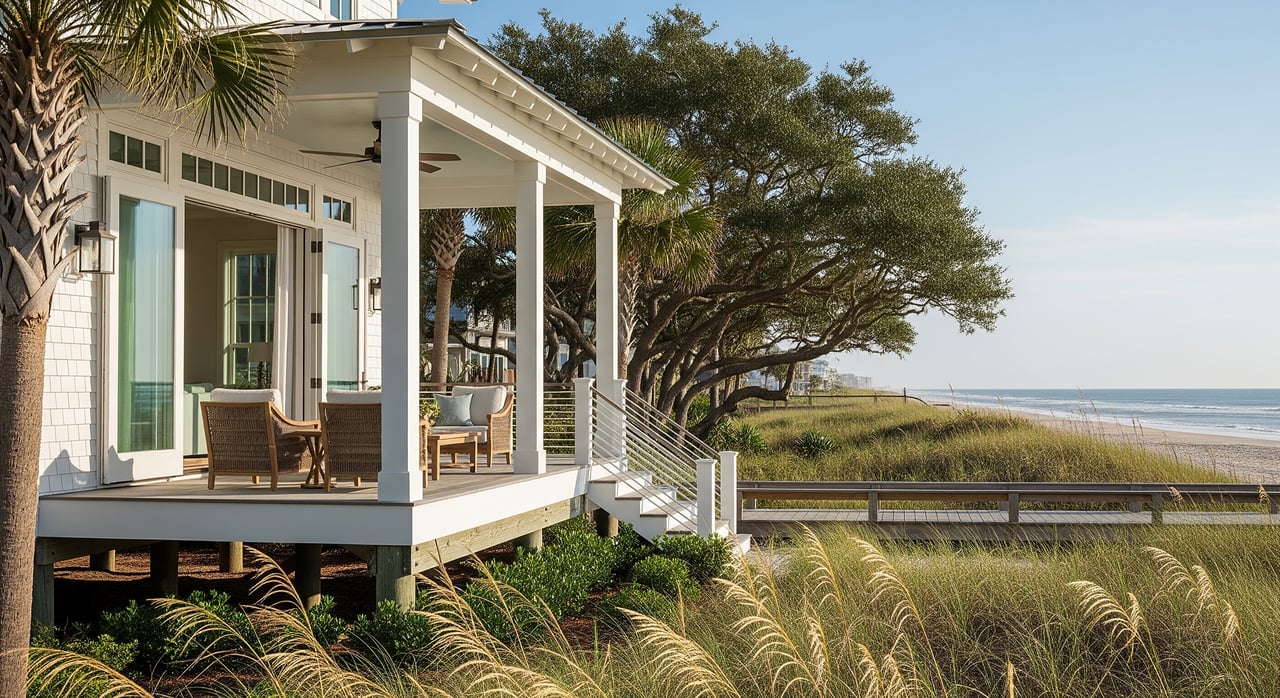
Trying to choose between Market Common and Carolina Forest but not sure which one fits your life right now? You’re not alone. Both are popular Myrtle Beach areas, yet they deliver very different daily experiences. By the end of this guide, you’ll understand lifestyle tradeoffs, home types, pricing, HOA and rental rules, and practical drive times so you can pick with confidence. Let’s dive in.
Market Common at a glance
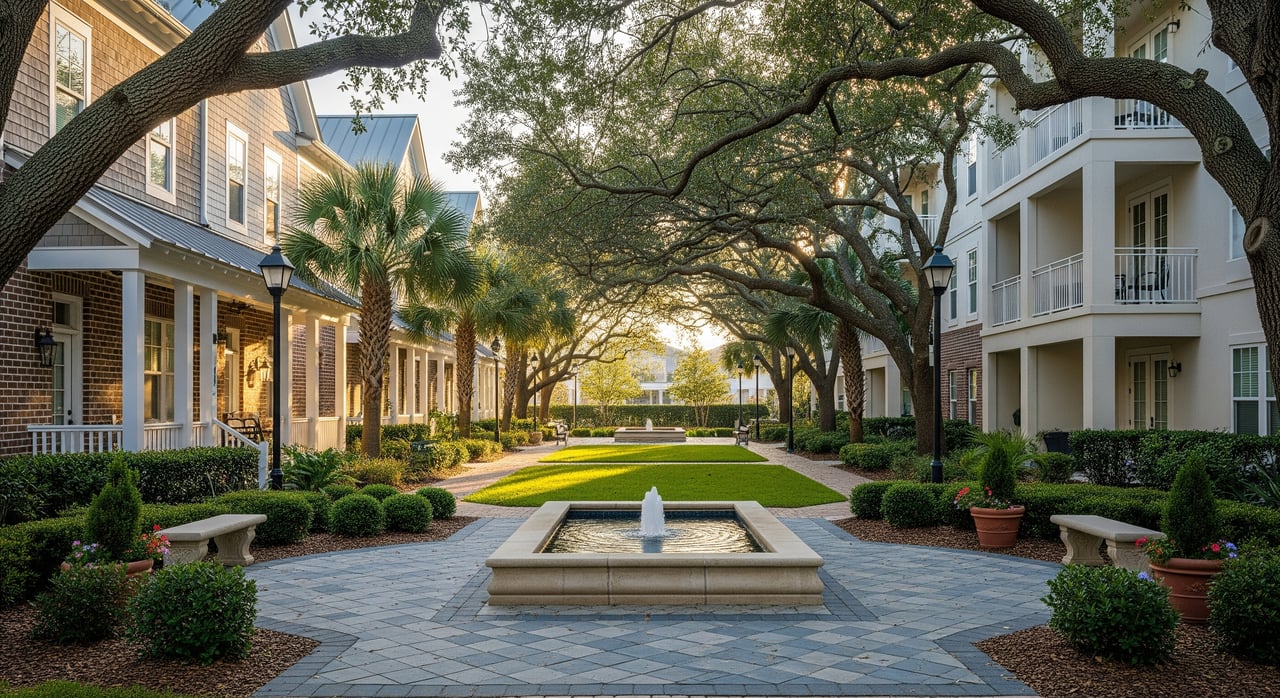
Market Common is a compact, curated urban village built on the former Myrtle Beach Air Force Base. It was designed for a “live-work-play” lifestyle with a central town square, restaurants, shops, a cinema, parks and frequent public events. You can explore the official overview and events on the Market Common site.
You’ll find a walkable core that makes daily errands and dining easy. Addresses near the town center score as “somewhat to very walkable” on Walk Score. For example, an address along Deville Street is rated walkable, reinforcing the low-car routine many residents enjoy (Walk Score example).
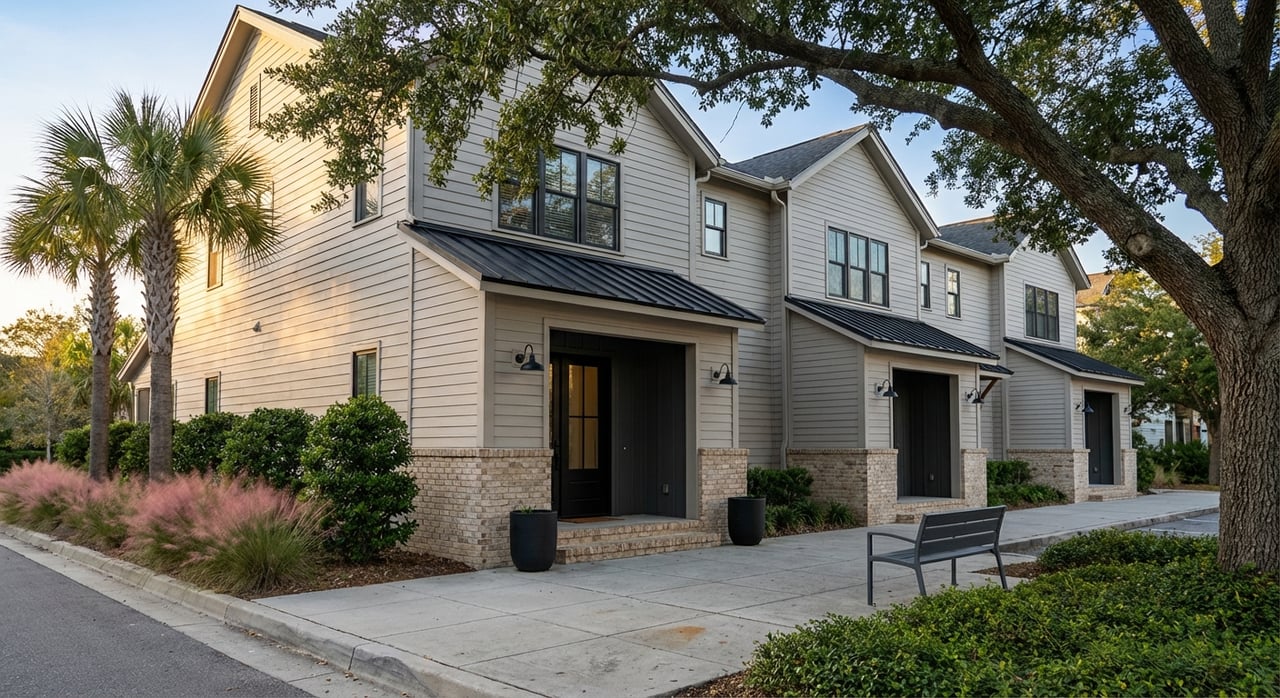
Housing is a mix of apartments, condos, townhomes, and pockets of single-family homes, with smaller lots and attached housing common in the core. There are also nearby 55+ options like Cresswind that appeal to downsizers who want social amenities and low maintenance. See the housing overview on The Residences pages.
Carolina Forest at a glance
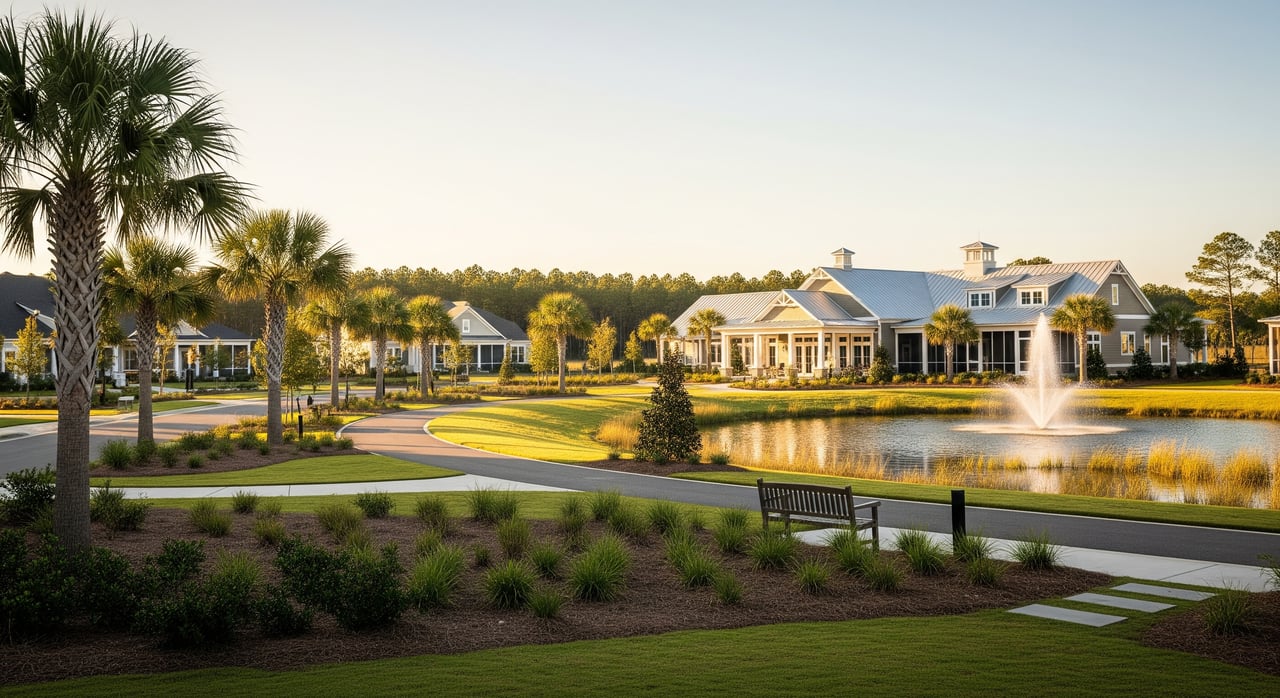
Carolina Forest is a much larger, suburban master-planned area made up of many distinct neighborhoods. It emphasizes yards, neighborhood amenities, and new-construction options. The Carolina Forest Civic Association offers local updates and community information for residents and owners (Carolina Forest Civic Association).
Daily life is more car-oriented. Retail is clustered along main corridors with grocery stores, big-box shopping and family dining. Families value access to public recreation at the Carolina Forest Recreation Center, which is operated by Horry County.
Homes here are mostly single-family on larger lots, with floor plans geared to 3 to 5 bedrooms, garages and flexible family spaces. If you want more square footage and private outdoor space, this is a strong fit.
Home types and HOAs
Both areas include many separate neighborhoods and condo associations, each with its own covenants, amenities and fee structures.
- Market Common: Expect a wider range of attached homes, compact single-family pockets, and active-adult options. Fees often fund pools, landscaping and shared amenities. Lots are smaller and architectural controls can be higher.
- Carolina Forest: Primarily single-family homes in subdivision HOAs that maintain entrances, landscaping and amenity centers. Fees vary widely by neighborhood and amenities.
What this means for you: budget not only for your mortgage and insurance but also for HOA dues. Always review the HOA budget, rules and rental policies during due diligence. Ask for recent financials, reserve information and any planned assessments.
Pricing snapshot and value
Published medians vary by data vendor and timing. In broad terms, Carolina Forest tends to offer more house and lot for the money, while Market Common commands a premium for walkability and amenities.
- Carolina Forest: neighborhood-level medians are commonly cited in the low-to-mid $300ks, based on public market overviews and neighborhood data (sources accessed Feb 2026).
- Market Common: medians are commonly reported in the $400ks and higher depending on home type and location within the district (sources accessed Feb 2026).
Practical takeaway: If your top priority is space and yard size at a given price point, start in Carolina Forest. If your priority is a central, walkable lifestyle close to restaurants and parks, focus on Market Common. For current, address-specific comps, request a 12-month MLS analysis for the exact subdivision and home type.
Commute and convenience
- Market Common: You are close to the beach, Myrtle Beach International Airport and the hospital corridor. Many addresses sit roughly 1 to 3 miles from the shoreline, with short drives to attractions and services. See the neighborhood orientation on The Residences pages.
- Carolina Forest: You’re inland with quick access to local grocery, schools and big-box retail within the area. Plan on roughly 10 to 15 minutes to reach central Myrtle Beach or Market Common depending on traffic and season. Summer and school-peak hours can lengthen drive times.
Schools and recreation
School assignments depend on your exact address and can change over time. Verify with Horry County Schools before you buy.
- Carolina Forest: The area includes multiple schools in the attendance cluster, and public information sources show positive signals that draw many families. For example, GreatSchools lists Carolina Forest High with above-average local ratings (GreatSchools profile). The county-operated Carolina Forest Recreation Center adds to local programming and youth sports.
- Market Common: Addresses typically feed into the Myrtle Beach school cluster. For retirees and frequent travelers, the proximity to medical facilities and the airport is a major quality-of-life plus. Private school options are also within driving distance. Always verify current boundaries for your specific address.
Use neutral, fact-based sources and confirm your school options during due diligence. Your priorities may include commute to a specific campus, extracurricular programs, or access to public recreation.
Short-term rentals and zoning
In Myrtle Beach, the city’s zoning code governs where short-term rentals are allowed. Many residential R-zoned districts prohibit rentals under 90 days, and properties used for short-term rentals generally require a business license and the collection of accommodations taxes. The city also adopted an overlay in late 2024-2025 affecting certain oceanfront blocks, and implementation continues to evolve. For the most accurate picture, confirm zoning and HOA rules for the exact property. For an overview of how zoning shapes STR locations, see this local explainer on Myrtle Beach’s zoning and STR rules.
Key steps if rentals matter to you:
- Confirm the parcel’s zoning with the City or County.
- Review the HOA’s rental policy and minimum lease terms.
- Ask about required business licensing and local tax obligations.
Insurance, flood risk and carrying costs
Along the Grand Strand, flood zones and wind coverage can impact both lender requirements and your monthly budget. Before you commit, take these steps:
- Check FEMA Flood Insurance Rate Maps and the county GIS for flood-zone designation and elevation.
- Ask the seller for recent insurance history where available.
- Get quotes from an insurance professional familiar with coastal wind and hurricane coverage.
Market Common’s proximity to the coast can mean different risk profiles at the micro level compared to inland pockets of Carolina Forest. Two properties a few blocks apart can carry different requirements, so do not rely on assumptions.
Which buyers fit each area
Every household is different, but here are common patterns to help you decide:
You may prefer Market Common if you want walkability, a low-maintenance home, and quick access to restaurants, events, healthcare and the airport. Downsizers, second-home owners and professionals who value a central lifestyle often start here. Pros include a lively town center and compact neighborhoods that support walking and golf-cart use in pockets. Tradeoffs include smaller lots, higher price per square foot and HOA dues that can include shared amenities.
You may prefer Carolina Forest if you want a larger single-family home, more private outdoor space, and family-focused amenities at a lower cost per square foot. Pros include larger lots and broad new-construction options. Tradeoffs include more daily driving for the beach and entertainment, and HOA rules that vary by subdivision.
Quick decision checklist
Use this simple filter to narrow your search:
- What matters more today: walking to restaurants and errands or a larger yard and more space for the money?
- For each property you like, do the following:
- Pull the HOA covenants and budget, including rental rules.
- Run the county GIS and FEMA maps for flood zone and elevation.
- Confirm zoning and short-term rental allowance with City or County staff. For background, review this zoning and STR overview.
- Verify current school assignments with the district.
- Request a 12-month MLS comp set for the exact subdivision and home type.
A local guide to help you choose
Your home choice should fit your life, budget and next chapter. If you want a calm, structured process with clear comparisons, local insight and strong negotiation on your side, I’m here to help. From walkable-townhome living in Market Common to larger single-family options in Carolina Forest, I’ll help you weigh tradeoffs and protect your interests from first tour to closing.
Ready to talk through your options or see a custom list of homes? Connect with Elayna Cassidy. Let’s find the place that fits you.
FAQs
What is the main lifestyle difference between Market Common and Carolina Forest?
- Market Common offers a walkable, mixed-use town center with restaurants, shops and parks close together, while Carolina Forest is a larger suburban area centered on single-family neighborhoods and car-based errands.
Are prices higher in Market Common or Carolina Forest?
- In general, Carolina Forest is often cited in the low-to-mid $300ks for neighborhood-level medians, while Market Common is commonly reported in the $400ks and higher depending on home type and location (public sources accessed Feb 2026).
How do HOA fees compare between the two areas?
- Both areas have many separate HOAs with different fees and amenities. Market Common townhomes and condos often include pools and grounds in monthly dues, while many Carolina Forest single-family communities have lower subdivision fees, but specifics vary by neighborhood.
Can I operate a short-term rental in either area?
- It depends on the property’s zoning and the HOA’s rules. Many residential R-zoned districts in Myrtle Beach prohibit rentals under 90 days. Confirm the parcel’s zoning and HOA covenants before you buy, and review this zoning and STR overview.
Which area is closer to the beach and airport?
- Market Common is physically closer to the beach and Myrtle Beach International Airport, often within a few miles, which makes quick trips to attractions and travel days easier.
What should I verify before making an offer in either area?
- Review HOA covenants and budgets, confirm zoning and rental rules, check flood zone and insurance needs, verify current school assignments, and request a fresh MLS comp set for the exact subdivision.