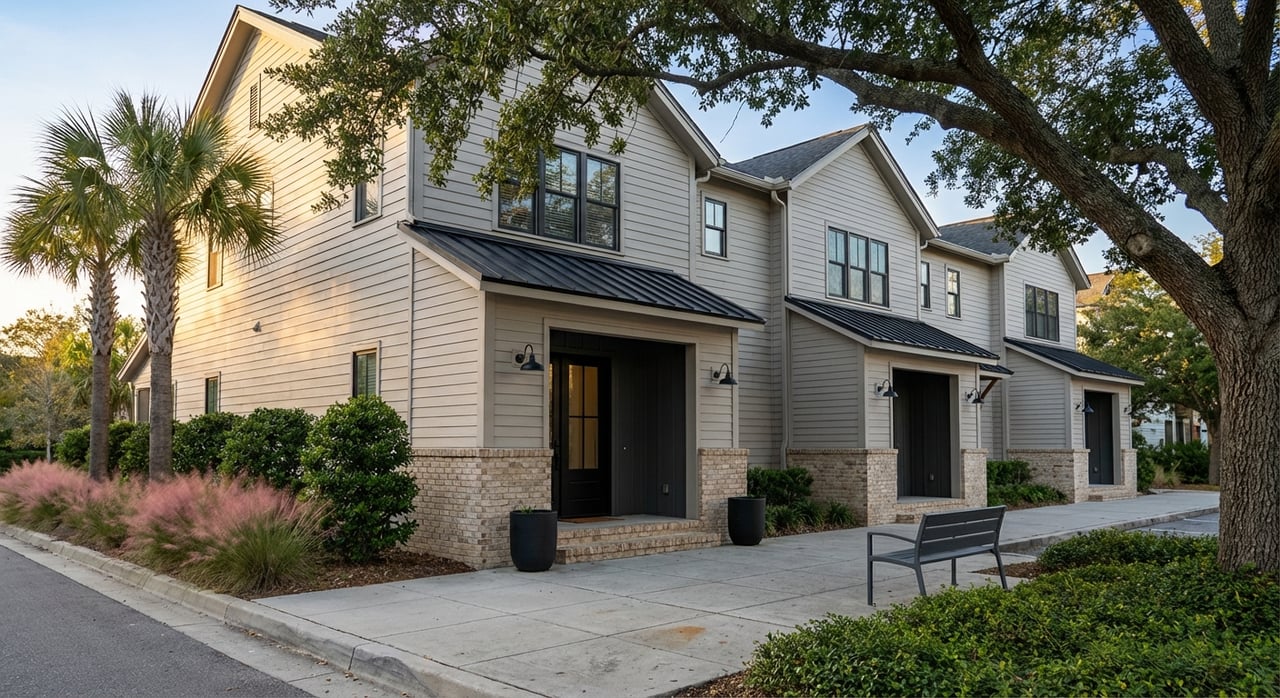
Not sure if that Market Common townhome is in an HOA or a condo association? You are not alone. The terms sound similar, but they affect what you own, what you maintain, and what you pay each month. In this guide, you will learn the core differences, how Market Common communities are structured, what fees typically cover, and the practical checks to complete before you buy. Let’s dive in.
HOA vs condo basics
An HOA, or homeowners association, usually governs a planned community where you own the lot and the structure. The association owns and maintains shared spaces like entrances, parks, and private roads. You follow the community’s covenants, conditions, and restrictions.
A condo association governs a condominium. You own your unit interior and share ownership of common elements like the roof, exterior walls, elevators, and land. The association manages those shared elements on behalf of all owners.
What this means for you
- Ownership: In an HOA you often own the land and building. In a condo you own the inside of the unit plus a shared interest in the building and grounds.
- Maintenance: HOAs often put more exterior upkeep on individual owners. Condo associations typically handle the building’s exterior, structure, and common systems.
- Insurance: HOA owners usually carry a full homeowner policy for the entire structure. Condo owners typically carry an HO-6 policy for interiors and personal property while the association carries a master policy for the building shell and common areas.
- Fees and reserves: Both collect dues and set aside reserves. Condo associations often face higher building insurance costs, which can increase monthly fees.
Townhomes can be either model
In Market Common you will see townhomes in both setups. Some townhome communities function like condos where the association covers exteriors. Others are fee-simple HOAs where the owner handles exterior upkeep. The governing documents for the specific property determine which applies.
How Market Common is structured
Market Common is a master-planned community in the Myrtle Beach area with a mix of condos, townhomes, and single-family homes. Large planned communities often have a master association for neighborhood-wide amenities and separate sub-associations for specific buildings or neighborhoods.
Expect two layers of rules and fees in many cases. The master association manages big-picture items and shared amenities. Your building or neighborhood association sets rules for your immediate area and handles maintenance specific to that property type. Understanding the relationship between the master and sub-association helps you budget and avoid surprises.
Because this is a coastal market with second homes and investment properties, rental rules and local ordinances can shape both lifestyle and value. If you plan to rent, confirm rules at both the master and sub-association level and review applicable local regulations.
What your fees cover
Association dues pay for operations, upkeep, and future repairs. The exact mix depends on whether it is an HOA or condo, and what each document assigns as responsibility.
Common components include:
- Routine maintenance for common areas, landscaping, private streets, and entry features
- Amenities such as pools, parks, gym, clubhouse, and security gates
- Common-area utilities like irrigation and exterior lighting; sometimes bulk water or sewer for shared lines
- Management company and administrative costs
- Insurance on association property and, in condos, the building shell and common elements
- Reserve contributions for large capital items like roofs, paving, elevators, or major systems
Key difference you will notice: condo associations often include building insurance and exterior maintenance in the monthly fee. That can increase dues, but it reduces individual repair exposure. HOA fees for fee-simple homes tend to exclude exterior repairs, so you budget for your own roof, siding, and systems.
Maintenance and insurance
Who fixes what is one of the most important questions you can ask.
- Exterior and structure: Condo associations typically maintain roofs, siding, hallways, elevators, and common plumbing lines. HOAs often put exterior maintenance on the owner unless documents say otherwise.
- Insurance: Condo associations carry a master policy for the building and common elements. Unit owners carry an HO-6 policy for interior finishes, personal property, and loss assessments. HOA owners usually carry a standard homeowner policy that covers the full structure and contents, while the association insures common areas.
- Deductibles and gaps: Ask what the master policy covers and the size of its deductible. Large deductibles can be passed to owners through assessments if a claim occurs.
In coastal Horry County, wind and flood exposures can affect both association and owner insurance. Some parts of Market Common sit inland relative to the beach, but flood zones vary by block. Check the property’s flood zone and any lender requirements, and confirm whether the association handles stormwater systems or other risk-mitigation responsibilities.
Financing and resale factors
Condo financing adds project-level checks. Many lenders review owner-occupancy levels, reserve funding, and any litigation before approving loans. If you plan on conventional financing for a condo, verify that the project meets lender eligibility standards early.
Both condo associations and HOAs may charge transfer or estoppel fees at closing to produce required documents. Plan for this line item. Also review any resale application or board approval steps to avoid delays.
Governance and financial strength impact resale. Well-funded reserves, clear maintenance assignments, and transparent management tend to support smoother ownership and broader buyer financing options.
Rentals: rules and reality
Rental policies vary by association and can change through owner votes. Some communities allow rentals with minimum lease terms. Others limit short-term rentals or require registrations. Local regulations in Myrtle Beach and Horry County may also affect permitting and business licensing.
If you plan to rent, confirm rules in writing at both the master and sub-association level and review current local requirements. Rental rules influence income potential, financing options, and future resale demand.
Buyer due diligence checklist
Request these items as early as possible. Make your review a contingency when you can.
- Declaration, bylaws, and rules and regulations
- For condos: condominium declaration that shows unit boundaries and defines common elements
- Current operating budget and last 2 to 3 years of budgets or audits
- Most recent reserve study and current reserve fund balance
- Year-to-date income and expense statement
- Accounts receivable or delinquency report
- Board meeting minutes for the last 12 to 24 months
- History of special assessments in the past 5 years and any planned capital projects
- Association insurance certificate, including master policy coverages and deductibles
- Management contract and vendor agreements that affect costs or services
- Estoppel or resale package and confirmation of any transfer fees
- Pending litigation disclosures and related documents
- Policies on pets, parking, exterior modifications, leasing, and short-term rentals
As you review, pay special attention to maintenance responsibility, reserve funding for big-ticket items, insurance coverage and deductibles, and any upcoming projects that could drive assessments.
Red flags to watch
- No recent reserve study or very low reserves compared to future needs
- A pattern of frequent or large special assessments
- Active or threatened litigation against the association
- High delinquency rates among owners
- Ambiguity in the documents about who maintains roofs, exteriors, and key systems
- Unclear or changing rental rules if you plan to rent
If you see more than one of these, slow down and dig deeper. You may still love the home, but you want a clear picture of costs and responsibilities.
Smart steps with your agent
- Clarify the type of ownership early. Confirm whether it is a condo, an HOA, or both under a master association.
- Ask for the resale or estoppel package up front and set document review as a contingency.
- Loop in a lender familiar with local condo and HOA requirements if financing is needed.
- Review insurance needs for wind and flood, plus any master policy deductibles that could be passed to owners.
- Confirm rental policies and local registration or licensing requirements if applicable.
A clear, step-by-step process protects your budget, financing, and peace of mind while keeping your timeline on track.
Work with a local guide
Choosing between an HOA or a condo association in Market Common comes down to fit. What you own, what you maintain, and how the community operates should match your lifestyle and risk comfort. With the right documents and a structured review, you can buy with confidence and enjoy the convenience that drew you to Market Common in the first place.
If you would like a calm, disciplined partner to help you evaluate fees, insurance, and documents, connect with Elayna Cassidy. Let’s write your next chapter — book a consultation.
FAQs
What is the main difference between an HOA and a condo association in Market Common?
- In an HOA you usually own the lot and home and handle more exterior maintenance. In a condo you own the unit interior while the association maintains the building exterior and common elements.
How do monthly fees differ between HOAs and condos?
- Condo dues often include building insurance and exterior upkeep, which can raise monthly costs but reduce individual repair exposure. HOA fees tend to be lower but owners budget for their own roof, siding, and systems.
What insurance do I need for a Market Common condo vs a townhome?
- Condo owners usually carry an HO-6 policy for interior finishes and personal property while the association insures the building shell. Townhomes can be either style; confirm whether your association or you maintain and insure the exterior.
Are short-term rentals allowed in Market Common communities?
- It depends on the specific association and local regulations. Review both master and sub-association rules and check current city or county requirements before assuming rentals are allowed.
How can I check flood and wind risk for a Market Common property?
- Review the property’s flood zone, lender requirements, and association documents for stormwater or hazard responsibilities. Discuss wind and flood coverage needs with your insurer and lender early in the process.
What are the biggest red flags in association documents?
- Very low reserves, frequent special assessments, pending litigation, high delinquencies, and unclear maintenance responsibility are signals to investigate further before moving forward.